
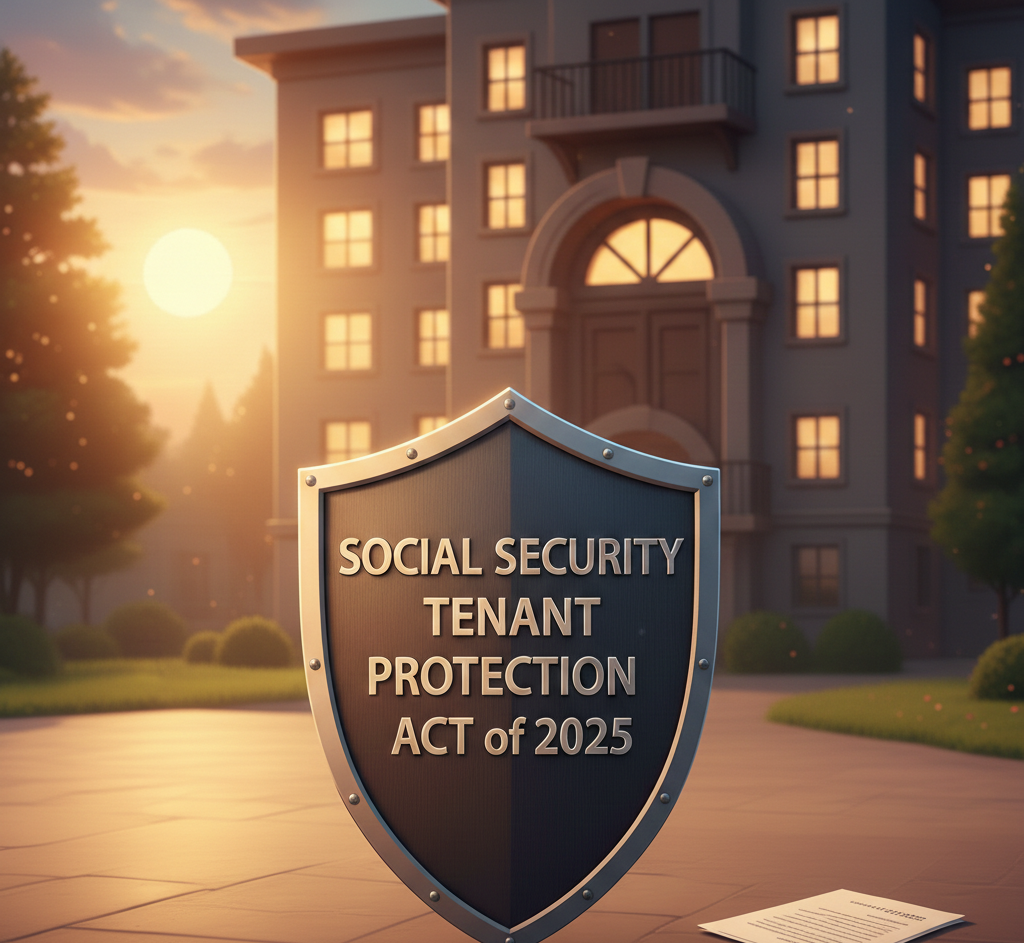
In October 2025, California enacted Assembly Bill 246, officially titled the Social Security Tenant Protection Act of 2025. Signed into law on October 6, 2025, this legislation adds a new layer of tenant protections to California’s housing law, specifically targeting situations where tenants face eviction due to interruptions in Social Security income. They added Section 1946.3 to the California Civil Code.
Catalyst for AB 246:
Housing affordability and stability remain central concerns in California. For many seniors, people with disabilities, and households relying on Social Security benefits, interruptions in federal benefit payments can create severe financial strain. AB 246 responded to this concern by creating a legal defense for tenants who struggle to pay rent only because their Social Security income was delayed, reduced, or cut off due to federal government action or inaction. This law is part of a broader package of tenant-focused housing statutes signed in 2025, signaling strong legislative intent to protect renters facing economic vulnerabilities.
Core Provisions of AB 246
Under the Act, a renter can assert Social Security hardship as an affirmative defense in an eviction (unlawful detainer) proceeding triggered by nonpayment of rent. The law defines this hardship as a loss of income from Social Security benefits, resulting from an interruption in those payments due to federal action or inaction, and the income loss directly prevented the tenant from paying rent.
If the tenant provides satisfactory evidence of this hardship, the court must stay (pause) the eviction proceedings. It is on the tenant to properly raise this defense in their formal Answer to the eviction lawsuit. Simply providing a statement or evidence to the owner/landlord or attorney is not enough.
Importantly the law does not forgive past-due rent. The tenant must, within 14 days of restored Social Security payments, either pay all back rent, or enter a payment plan with the landlord. If the tenant complies, the eviction case must be dismissed or set aside.
Sunset Date and Implementation
AB 246 is set to be in effect until January 20, 2029 and the court must update forms and procedures by January 1, 2027 to implement these protections.
Support and Criticism
Tenant advocates and disability rights groups applauded AB 246 for directly addressing the risk that seniors and disabled renters could face eviction if Social Security checks are delayed. Supporters argue the law fills an important gap by linking housing stability to federal benefit reliability, especially in times of federal policy uncertainty.
On the other hand, housing providers and landlord associations raised concerns that AB 246 could complicate eviction filings, impose new procedural requirements, and introduce uncertainty for rental housing operations.
Practical Impact
For Tenants who rely on Social Security benefits, AB 246 gives a stronger legal footing if a federal disruption affects the tenant’s ability to pay rent. To use this defense, the tenant must document the interruption and show the direct impact on their ability to make rental payments. Once payments resume, the tenant must promptly address any rent owed through payment or negotiation.
Landlords cannot proceed with eviction solely because a tenant missed rent due to a qualified Social Security interruption if the tenant raises the defense. Landlords should update their unlawful detainer procedures and prepare for potential stays of proceedings under this statute.
As AB 246 takes effect and housing courts implement its procedures, its real-world impact will become clearer. It represents a nuanced blend of housing protection and legal process reform, tailored to help some of California’s most economically vulnerable renters maintain stable housing during temporary income disruptions.